The Tower of London is one the world’s leading tourist attractions and a world heritage site, attracting visitors from all over the world including moi. I can't tell you the numer of times I have visited the tower while visiting London, and this particualr trip was no exception.
The Tower of London has a long and macabre history as a place of imprisonment and incarceration. From being the execution site of queens, whose ghosts are said to still haunt its halls, to the current home of the Crown Jewels. It has a wealth of secrets begging to be explored.
This historic castle was founded by William the Conqueror in 1066 is based in the heart of London. However, the Tower of London is not its official name. The building’s official title is Her Majesty’s Royal Palace and Fortress of the Tower of London.
Before the Tower became a prison for humans, it was a prison for animals in the form of London’s first zoo. Known as the ‘Royal Menagerie,’ the Tower housed the royal collection of wild and exotic animals that were gifted to the kings and queens that reigned. In 1835 the Duke of Wellington closed the menagerie, and the animals were moved to grounds in Regent’s Park that later became the London Zoo. Today, all that is left of the animals at the Tower are the sculptures of lions and other animals dotted about the grounds.

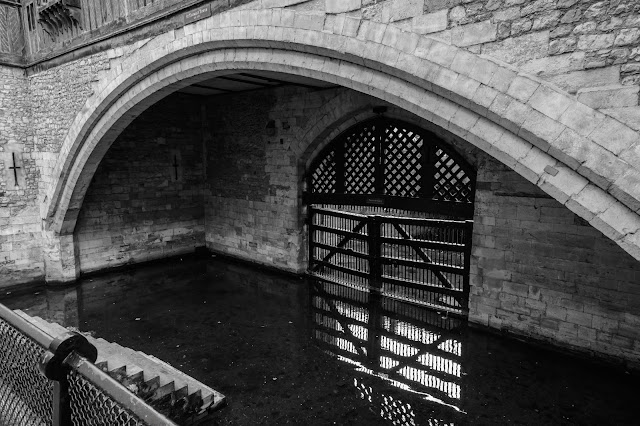


One of the many unique attractions at the Tower of London is the Crown Jewels. Officially known as Royal Coronation apparel, the Crown Jewels have been safely stored in the Tower of London since the 15th century.
The collection includes some of the world's most valuable and historic jewels, such as the Imperial State Crown, which the monarch wears at the State Opening of Parliament. The Imperial State Crown boasts 23,578 gemstones and is thought to have a value of between two and four billion pounds!
Other items kept in the Tower include royal robes and jewelry, which are brought out and sent to Westminster Abbey when a new King or Queen is crowned.
Because of their value, photography is not allowed in the section of the Tower where the jewels reside. Therefore, you have to take my word for it when I say they are one the most oustanding, priceless artifacts known to man.


Resident Ravens are the Guardians of the Tower and have long been part of the history and are protected by royal decree.When Charles II wanted the ravens removed, he was told that the monarchy would fall, so the ravens stayed and have called the Tower home ever since.
The names of the current Tower ravens are Jubilee, Harris, Poppy, Georgie, Edgar and Branwen. They are intelligent birds and each have their own personality; they can mimic sounds, play games and solve problems. The ravens preside over four different territories within the Tower's walls and will only respond to the Ravenmaster.


The Tower of London has been guarded by famous Yeoman Warders since the 16th century. Also known as the ‘Beefeaters,’ these ceremonial guardians of the Tower were responsible for safeguarding the British crown jewels and looking after any prisoners in the Tower.
Today, Yeoman Warders are selected for their outstanding service in the Armed Forces. They still play the ceremonial role of guardians to the Tower and provide information and guided tours to visitors as they have done since the Victorian era.
Why the name ‘Beefeaters’? The odd name stems from Henry VII, whose personal guards were the first ‘Beefeaters,’ as they were allowed to eat as much beef as they wanted from the King's table.


The Tower gates are locked in a historic military tradition known as the Ceremony of The Keys every evening. At precisely 9:53 pm, the Chief Yeoman Warder, accompanied by an armed escort of the Queen’s Guards, set off to lock all the gates carrying a lantern in one hand and the Queen’s Keys in another.
The evening ritual has continued for over 700 years without fail – the faithful Yeoman Warders did their job for Queen and country throughout the Great London Fire, the Plague, and both World Wars.


The long and gruesome history of the Tower as one of the most brutal prisons in England and a place of execution was never planned. The Tower was built primarily as a secure fortress to showcase royal power.
However, the Tower became home to anyone who threatened the Royals or the country. Many famous historical figures were held prisoner within its walls, including Anne Boleyn, Catherine Howard, Sir Walter Raleigh, and Queen Elizabeth I.
Many were also executed and murdered here, including the two boy princes, Edward V and Richard. The last execution in the Tower of London occurred in 1941 when a firing squad shot German spy Josef Jakobs.


During World War I and II, the Tower of London transformed into an impenetrable military base.
During WWI, the moat around the Tower was used as a training ground for recruits. Today, the headquarters of the Royal Fusiliers Regiment is still based at the Tower.
During the Second World War, Rudolf Hess, the infamous Nazi prisoner of war, was held prisoner at the Tower after crash landing in London during a flight to Scotland and being captured. Twelve enemy spies were also executed here during the war.
During World War I, only one bomb fell on the Tower, landing harmlessly in the moat. During World War II, however, the Tower was devastated. High-explosive bombs found their target during the Blitz in 1940, destroying several buildings. One of the towers completely collapsed into the moat below it.
After the war, the damage was repaired, and the Tower opened to the public once again.


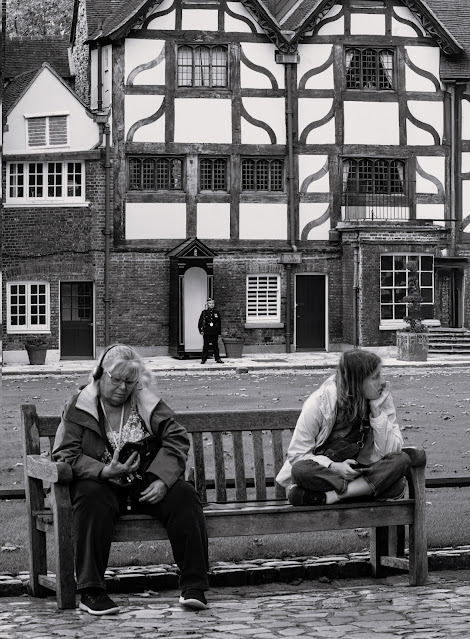
While the last few photos are not of the Tower of London, they are photos of architecture that surround the area of this highly visited iconic site.


 Posts
Posts

