Monday, November 15, 2021

The Crazies Came Out

 I had this idea and I wanted to execute it without going through too much set up and such.

Took the camera, a few of the props I needed and set them up for a click.

Well.......click I did. 

But the result was not what I had envisioned. 

Instead it turned out to be something totally different, but to my liking.

Slightly on the looloo side but that's ok, you can call me Lulu. 😁

Sort of like Paul Simon's song " You Can Call Me Al"


Live and Learn!


Sunday, November 14, 2021

Little Cardinal- Experiment

 I've been wanting to capture this little guy's photo for a while and yesterday I was somewhat lucky when he sat on the fence line, but it wasn't exactly what I had envisioned.

 Today, I opened the patio door and this little guy flew right in and perched on our windowsill. Of course I ran and grabbed my camera. He sat there quietly for a few seconds and then he got nervous and started fluttering his wings. I got nervous, afraid he would fly around and hurt himself. But lucky for both of us....he flew right out the same way he came in.

 The above post is actually a post I made on Photoblog May 30, 2017. I wanted to see how easy/difficult it would be to reproduce some of those posts from Photoblog onto here. And with a few steps they can easily be recreated. As long as you have a copy of the old Pb posts.


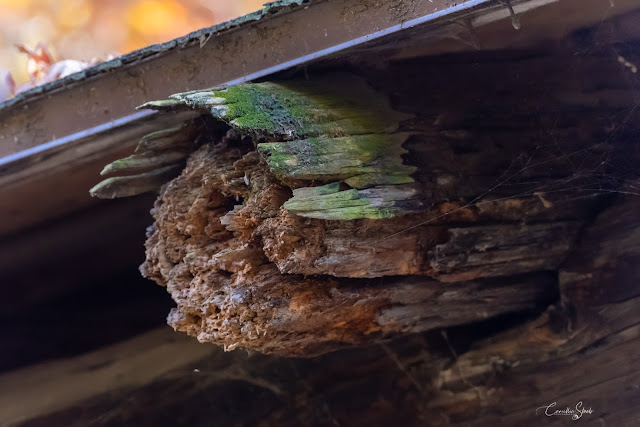
侘寂 Wabi- Sabi - Week 46

 "Wabi- Sabi is a Japanese concept that centers around acceptance of imperfection and impermanence".

This week's challenge was to look for beauty in things that are not necessarily shinny and new but yet have an eye appeal that can not be ignored.

I looked around and found quite a few that were appealing to my eye.


And so another week behind me.


Friday, November 12, 2021

Abstracting with ICM

 Mother nature just had the hardest time making her mind up today. 

 The morning started with a nice looking sun but within no time, the clouds came rolling in and pushed the sun back. 

Then the wind started getting stronger and the sky got cloudier and grayer.
Sun was not about to give up, so it showed its face, again being pushed behind by the clouds. This routine went on most of the morning and then snow decided to join in the play.

 Back and forth between the sun, the clouds, the wind and the snow, neither one wanting to let the other stay around too long.

 Consequently, a perfect day not to venture out and play close to home.

 Play I did trying in camera movement with the wide angle lens.


On the first five I zoomed in an out @29mm, ISO 31, f/4.5, 1/4 sec.


On the two above I not only zoomed in and out but also side to side this time @39 mm.

Back to previous setting and zooming in and out.


I have no idea what happened here....I believe the camera did it's own version of  ICM and someone accidently pressed the shutter.

Wednesday, November 10, 2021

In Search Of A Studly Buck 🦌

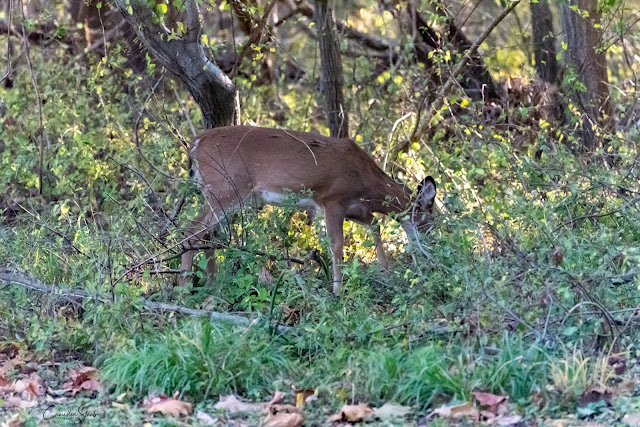
 It's that time of the year, when all the deer families step out of the bushes and start roaming the streets. 

It is also deer hunting season. 

I, at times, consider myself a deer hunter as well. Except I don't carry a bow & arrow, nor a firearm, instead I carry my camera. I have an advantage over the other hunters, that being, I can shoot as many deer as I want without a permit, while those hunters can only have one deer per permit.

Some years one has to really drive slowly and look around intently before spotting a deer during daylight, but this year, it's been a different case. The deer don't seem to be afraid of humans as much and hang around grazing without  any care.

These photos, an abundance of them, were taken on three different occasions.

I was driving around the lake and noticed this guy in the bushes. I decided to park the car and try to capture one or two photos.  But after two photos he managed to go deeper into the bushes, hence taking decent photos was out of the question.

As I turned around to walk back to my car I spotted this group. It looked like a momma deer was taking her fawns out for a stroll. What surprised me the most was the number of fawns around this one adult deer. Knowing that most deer have anywhere from one to two fawns per season, I guessed that maybe this was her day to babysit other's fawns .😉


After taking several photos and walking closer and closer, I noticed something odd. Momma deer was a three legged deer. Somewhere along she had lost one leg, (truth be known, I did not notice this oddity until after looking at the photos on the big screen, but hey that comment did catch your eye😎). 


This area is traversed by quite a few people, after all it is somewhat a residential area. Because of the presence of deer, other photographers have taken similar  photos, and one such photo is that of a beautiful huge buck with some really cool looking antlers. While I had spotted him several times, I was never quick enough to capture him before he disappeared into the bushes. 
Therefor he had been my reason to go "hunting".  But somehow or another I was never able to catch this beauty until......

Tuesday, November 9, 2021

Milkweed


I came across an exuberant amount of milkweed plants. Each plant having its unique texture and pose. Some had opened up and allowed their seeds to flow, while others were waiting to crack open. A few had the milkweed bugs resting on them.

"Milkweed grows to about 1.5 meters(5 feet) tall, usually occurring in clusters of stout stems. It has rhizomes and quickly forms colonies. Leaves are 15-20 centimeters (6-8 inches) long and 5-9 centimeters (2-3.6 inches) wide. They are somewhat thick with a prominent midrib beneath. The upper surface is light to dark green while the lower surface is lighter, almost white at times. Broken leaves and stems exude a milky latex. Flowers are borne in nearly spherical clusters (umbels) at the top of the plant, usually with 2-5 clusters per plant. Each flower is about 2 centimeters (0.75 inches) long and 1 centimeters (0.4 inches) wide. Flowers are greenish-pink to rosy pink to purplish-pink and very strongly and sweetly scented. Fruits (pods) are about 10 centimeters (4 inches) long, inflated and covered in little finger-like projections. They are green initially, turning brown as they mature. They split open revealing 50-100 seeds each with a white, fluffy coma ("parachute") that allows wind dispersal."


"Common milkweed is Nature's mega food market for insects. Over 450 insects are known to feed on some portion of the plant. Numerous insects are attracted to the nectar-laden flowers and it is not at all uncommon to see flies, beetles, ants, bees, wasps, and butterflies on the flowers at the same time. Occasionally hummingbirds will try, unsuccessfully, to extract nectar. Its sap, leaves and flowers also provide food. In the northeast and Midwest, it is among the most important food plants for monarch caterpillars."


"Other common feeders are the colorful (red with black dots) red milkweed beetle (Tetraopes tetraophthalmus), the milkweed tussock caterpillar (Euchaetes egle) and the large (Oncopeltus fasciatus) and the small (Lygaeus kalmia) red and black milkweed bugs. The latter two are particularly destructive as both the adults and nymphs are seed predators. They can destroy 80 to 90 percent of a colony's seed crop. The red (or orange-red) and black coloration of most of these insects is known as aposematic coloration; that is, the colors advertise the fact that the organism is not good to eat."


"Milkweeds contain various levels of cardiac glycoside compounds which render the plants toxic to most insects and animals. For some insects, the cardiac glycosides become a defense. They can store them in their tissue which renders them inedible or toxic to other animals. Monarch butterflies use this defense and birds leave them and the caterpillars alone. What the birds do not know is that northern monarchs feeding on common milkweed accumulate relatively little of the toxic compounds and probably would be edible. The more southern butterflies accumulate large amounts of the compounds from other milkweed species and are in fact toxic. Monarchs can be helped by encouraging existing patches and planting new ones. The plant grows readily from seed and spreads quickly by deep rhizomes." 


As mentioned above the plant is toxic as well as being very invasive, but at the same time it is a very attractive plant, especially when the pods open up and the floss and seeds dance with the wind.


(source)

Followers